Do you ever wonder what your 24-hour fast metabolism is like? Will it slow down? Some followers of OMAD said that they feel great and their metabolism has become faster. However, others feel a bit different. If you’re pushing through 24-hour fasts but feeling more depleted than ever, then you’re paying what is called the stress tax.
The 24-Hour Fast Metabolism: Why You Feel High But Look Stalled
Many people follow this extreme form of fasting because of the mental clarity they get after 20 hours. Unfortunately, for many, it’s not healthy. Rather, it can be adrenal masking.
When you fast for 24 hours, your body doesn’t know you’re doing it for longevity. Instead, it thinks you’re in a famine. Thus, it releases cortisol and adrenaline to keep you moving so you can hunt for food. It’s true that this adrenaline spike provides a temporary sense of focus. However, it’s causing deep physiological exhaustion. Over time, this chronic elevation of cortisol can lead to muscle wasting. It could also slow your metabolic rate.
The Biochemistry of the Stress Tax
- Stress tax is a metabolic bill that comes due. When your body is under constant threat, it starts to prioritize immediate survival over long-term repair.
- Thyroid Downregulation: The body may slow down the conversion of T4 to T3 to conserve energy. That’s the reason many extreme fasters experience thinning hair or a lower body temperature.
- Hepatic Glucose Production: When you’re chronically stressed and fasting, your liver may overproduce glucose to fuel the hunt. It leads to higher-than-expected fasting blood sugar levels.
- The Electrolyte Drain: Chronic cortisol elevation can lead to mineral depletion, specifically magnesium and potassium. These are vital for cellular energy and nervous system calm.
The Financial Stress and Cart Panic
We can’t discuss biological stress without talking about financial stress. When your vagus nerve is stuck in survival mode, your prefrontal cortex shuts down. This is where cart panic starts.
When you’re biologically depleted from a 24-hour fast, your brain looks for a quick fix to survive the day. It leads to impulsive spending on loaded teas or unverified supplements. You’re not just paying a tax on your health. But you’re also paying for it with your bank account. True intrinsic health requires you to stabilize your biology so you can make mindful decisions about your budgets and your bodies.
The Vagus Nerve and the Bloat-Binge Cycle
Chronic restriction keeps your nervous system in a fight or flight state. It’s a disaster for your vagus nerve, which is responsible for the rest and digest functions of your body. Unfortunately, if your vagus nerve is not regulated because of extreme fasting, it causes the following:
- Digestion shuts down: Your body stops producing enough enzymes and stomach acid during the fast.
- The Binge Response: Once you open your one-hour window, your brain is in a state of famine panic. It makes it impossible for you to eat mindfully.
- Post-Meal Shutdown: Because your system isn’t ready to digest, you end up with massive bloating, fatigue, and a food coma. These symptoms can last until the next day.
Signs of Stress Tax
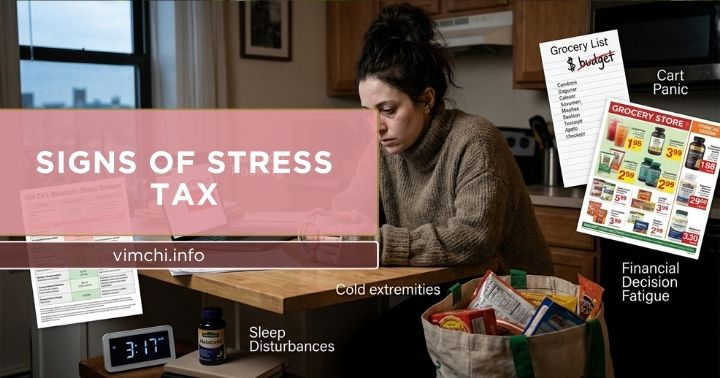
These are the biomarkers and somatic signals that indicate your 24-hour fast is backfiring:
- Cold extremities: Your body is prioritizing core heat and heart rate over non-essential circulation to your hands and feet.
- Cart Panic: You feel an impulse to buy expensive supplements or high-stimulant teas to fix your low energy.
- Sleep Disturbances: You’re wired but tired. You wake up in the middle of the night as your life struggles to manage blood sugar.
- Financial Decision Fatigue: You find it more difficult to stick to your grocery budget because your stressed brain is looking for a quick dopamine hit from convenience foods.
The Vagus Nerve Reset Library
To stop the shutdown, you need to re-train your nervous system to feel safe. These are the somatic tools you can use:
- The 2-Minute Somatic Body Scan: Before you even pick up a fork, scan from your toes to your jaw. Where are you holding tension? Is your jaw clenched in survival mode? You should release this tension before you eat to help with your metabolic recovery.
- Interoceptive Flashcards: You should also practice naming your sensations. Is that a hollow feeling in your stomach or a fluttering in your chest?
From Restriction to Regulation: The Exit Strategy
If your OMAD is stalling your metabolism, the answer isn’t fasting harder. Rather, it’s somatic regulation. You should move from a rigid clock to a signal-based system.
Phase 1
This is the awareness phase. The goal here is to change when you eat and how your nervous system perceives the upcoming meal.
Break the association between fasting and famine panic. For the vagal reset, five minutes before breaking your fast, you perform a specific exercise to shift your body from sympathetic to parasympathetic mode.
This works by calming the nervous system before the first bite. You optimize the production of digestive enzymes and stomach acid. It prevents the common bloat-binge cycle often seen in extreme fasters.
Phase 2
This phase introduces you to a bridge into your eating window to stabilize blood sugar and prevent the adrenaline spikes that mask true hunger.
The objective here is to move from a 23:1 OMAD window to a 20:4 window. One hour before your primary meal, consume a small nutrient-dense snack. This can be a hard-boiled egg or a small serving of Greek yogurt.
The said snack can act as a biological signal that the famine is over. It lowers your hunger hormone, known as ghrelin, and stabilizes your insulin. It also ensures that when you sit down for your main meal. You’re eating from a place of nourishment instead of desperation.
Phase 3
The final phase of the transition focuses on your interoceptive awareness. It moves your window toward a more sustainable 18:6 or 16:8 schedule. This is where you relinquish the clock entirely and rely on somatic data. Instead of waiting for a specific time, you wait for your true stomach growl. You learn to distinguish this form of hunger.
During this phase, you see the somatic body scan and interoceptive flashcard to monitor your heart rate, mood, and jaw tension. By the end of day 14, you’re no longer pushing through for the sake of a timer. You’re eating in response to biological signals. This allows your metabolism to exist in survival mode and function at its peak performance.
Reclaim Your Metabolic Peace
The goal of health isn’t to see how long you can survive on adrenaline and coffee. It’s to build a body that feels safe enough to thrive. When you pay the stress tax, you’re borrowing energy from your future selves. It’s often at the expense of your thyroid, digestion, and mental clarity.
When you move away from the rigid hours of a 24-hour fast isn’t a failure of discipline. Rather, it’s a triumph of interoceptive awareness. When you choose somatic regulation over restriction, you’re finally listening to what your body has been trying to tell you all along. You’re moving from a state of survival into a state of intrinsic health.
Take the First Step Toward Recovery
If you’re ready to stop the metabolic shutdown and start your journey back to balance, we’ve created a roadmap that works with your biology and not against it. So, join our waitlist for our OMAD to Intrinsic Transition Guide.
Sign up today to get the early bird launch price and receive our 14-day clinical step-down schedule, a reset library, and somatic body scan scripts directly in your inbox.

Jane is a licensed medical technologist who bridges the gap between clinical precision and digital innovation. While her formal background is rooted in the meticulous world of laboratory science, her passion lies in the logic of software development. When she isn’t analyzing data or writing clean, efficient code, you can find her on the golf course, applying that same focus and discipline to her swing.
I’m so glad you’re here. Your perspective adds so much value to this community—feel free to leave a note below!