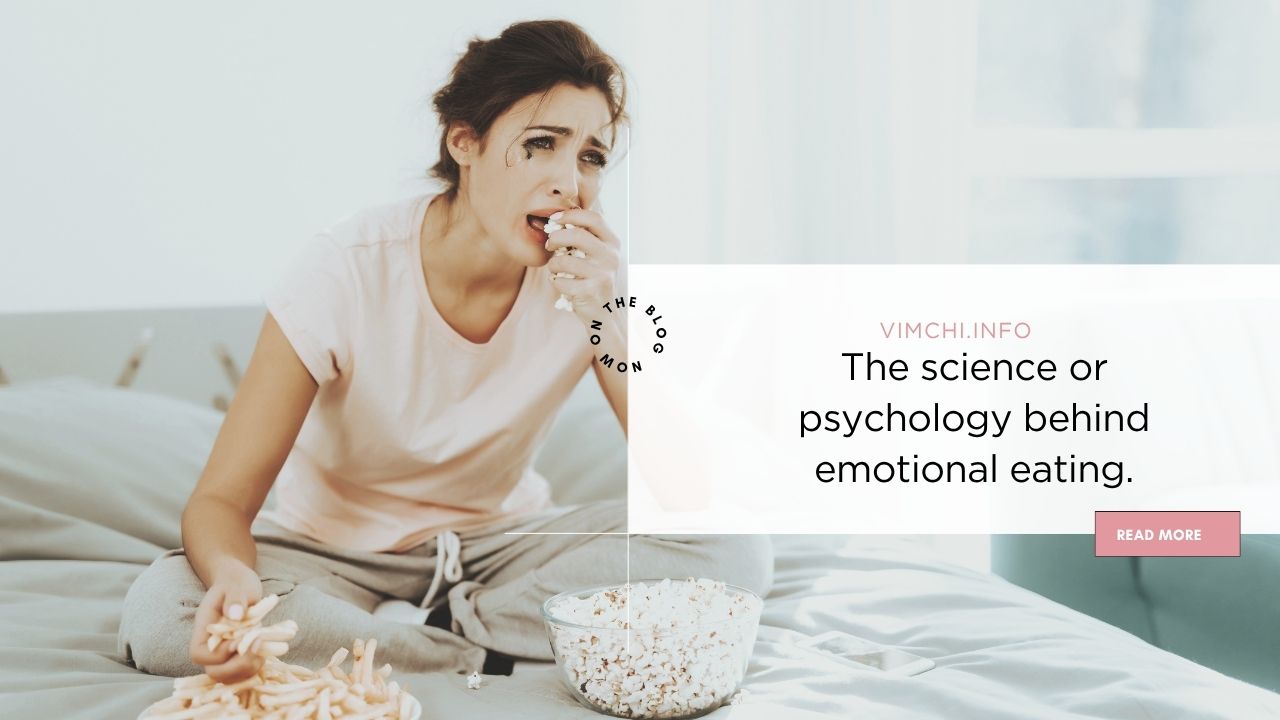
You can stop emotional eating by journaling. But it’s just one of the many ways to do it.
Do you use food to make yourself feel better? Do you eat just to satisfy your emotional needs, instead of satisfying your physical hunger? If you do, then it’s emotional eating. Whether you’re finishing a pint of ice cream after a difficult argument with your friend or eating the entire bag of chips, you’re not alone.
This guide breaks down the science or psychology behind emotional eating. It provides a practical step to break the cycle.
What is Emotional Eating?
It occurs when you use food to cope with something stressful. Eating helps you manage your negative emotions. When you do this, you don’t eat to fuel your body. Instead, you eat because you wish to soothe your anxious mind. Unfortunately, the relief that the food provides is only temporary. Your anxiety, for instance, remains. It’s accompanied by discomfort and guilt.
If you wish to stop eating mindlessly because you wish to halt your emotions, you need to recognize it. You can start by understanding the difference between emotional hunger and physical hunger.
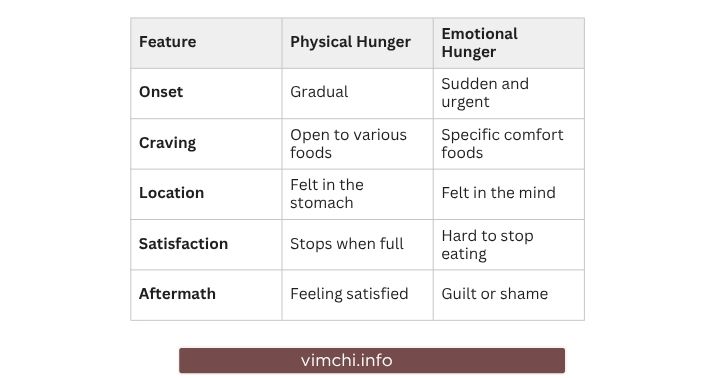
The Causes: Why Do You Use Food to Relieve Your Emotions?
Ever since you were young, food has been tied to your emotions. For instance, you celebrate with cake when there’s a birthday. Your mom probably gave you sweets as a reward. When you’re in a hospital, your visitors bring comfort food. This conditioning evolves into the use of food as a self-medication.
Stress
When you’re under pressure, your body produces a lot of cortisol. This is a stress hormone that causes you to crave sweet, high-fat foods. The reason for this is that these foods provide quick energy and pleasure. There’s nothing wrong with it if it only happens once a year. However, if you constantly ask yourself why you eat when stressed, it’s in your neurochemistry. Food numbs you. It provides temporary relief or pleasure. But after you consume an entire bag of chips or the remaining slices of cheesecake, you feel the pain again.
Boredom
It’s true that emotional eating is driven by trauma or anxiety. But if you don’t have anything to do, it can lead to emotional eating. Eating when bored is real. It’s a struggle. It’s also a way to give your brain something to do. The act of chewing provides input to your brain. Hence, it breaks up the monotony of a very uneventful morning.
Restriction
Restrictive dieting can often lead to emotional eating. When you deprive your body of the calories that you need, you engage in restrictive dieting. This deprivation can lead to intense cravings. When you no longer have willpower, it results in binge eating. Unfortunately, binge eating leads to physical starvation the next day and emotional rebellion.
Identify Your Personal Triggers

You can’t fix your habit if you don’t know what triggers it. That’s why knowing what triggers your emotions will help you stop the urge to eat. Identify your certain emotional eating triggers by combining self-reflection and pattern recognition.
- Emotional Triggers: These can be stress, anxiety, anger, sadness, and loneliness.
- Situational: If you pass by your favorite bakery, for instance, you have the urge to eat. Or if you attend social gatherings, you know there’s food provided. This, too, can trigger your cravings.
- Social Trigger: Your friends may pressure you to eat while you’re at a coffee shop. Or if you argue with your business partner, you eat just to numb the stressful situation. When you’re at a party, and you feel awkward, you eat all the food you can find to stop that feeling.
- Physiological: Have you ever eaten a full box of chocolate after just an hour of sleep? If you have, then it’s a trigger. A lack of sleep is one of the reasons you eat mindlessly.
Pro Tip: Use the HALT Method before you even get one bite. Simply ask yourself
- Am I Hungry?
- Angry
- Lonely
- Tired
If you say yes to angry, lonely, and tired, then you’re not really hungry. Food won’t solve your problem. Go have a glass of water. Walk around your neighborhood or just talk to your mom.
How Journaling Stops Emotional Eating?
When you’re emotionally eating, your logic doesn’t work. You can tell yourself a hundred times that cookies won’t fix your bad day. However, during that emotional state, your brain wants immediate comfort. And this is where journaling becomes an effective tool to help you recover.
Putting pen to paper can bridge the gap between your impulses and your rational mind. It’s not about writing your next novel. Rather, it’s about creating a space between your trigger and the reaction. When you make journaling a non-negotiable step before you open the pantry or fridge door, you’re forcing your brain to slow down. You can also slowly process what’s happening behind the trigger.
The Usefulness of Pausing
Emotional eating is an automatic habit. A trigger can just occur. When it happens, your brain immediately signals for a reward to soothe the discomfort. As a result, you reach for food. The sequence can easily happen, like in seconds. Unfortunately, you’ll only realize it after you’ve eaten.
When you sit down to write, you engage a part of your brain responsible for logic and impulse control. Just writing your emotions can decrease the activation of your brain’s emotional center. This is called affect labeling.
For instance, when you write, “I am feeling overwhelmed right now,” you lessen the intensity of the overwhelm. The feeling won’t disappear, definitely. However, it stops you from eating emotionally. It’s a built-in pause that all it takes to break the spell of your emotional craving. It gives you five minutes, which is enough to reduce the intensity of your false hunger.
Mindful Approach
It’s vital to distinguish therapeutic journaling from a simple food diary. For years now, health experts have taught us to track every calorie we eat. They also recommend weighing every portion and logging your macronutrients. I do this, too, if I can remember it. But this type of tracking can lead to restriction, guilt, and control. These are emotions that can start emotional eating.
If you’re trying to stop restricting dieting, a traditional way of logging your food may only cause more harm. However, it may work for some people. But it may only keep you fixated on the rules, instead of tuning into your internal cues.
For that reason, we created our mindful eating journal. A mindful journaling shifts your focus away from what’s on your plate so you can start knowing why you’re eating. It’s not an Excel sheet of your food sins. Rather, it’s a safe place for you to inquire about your eating habits. You’re tracking your mode, your sensations, and your environment. The goal here is to be more aware of yourself and not restriction or punishment.
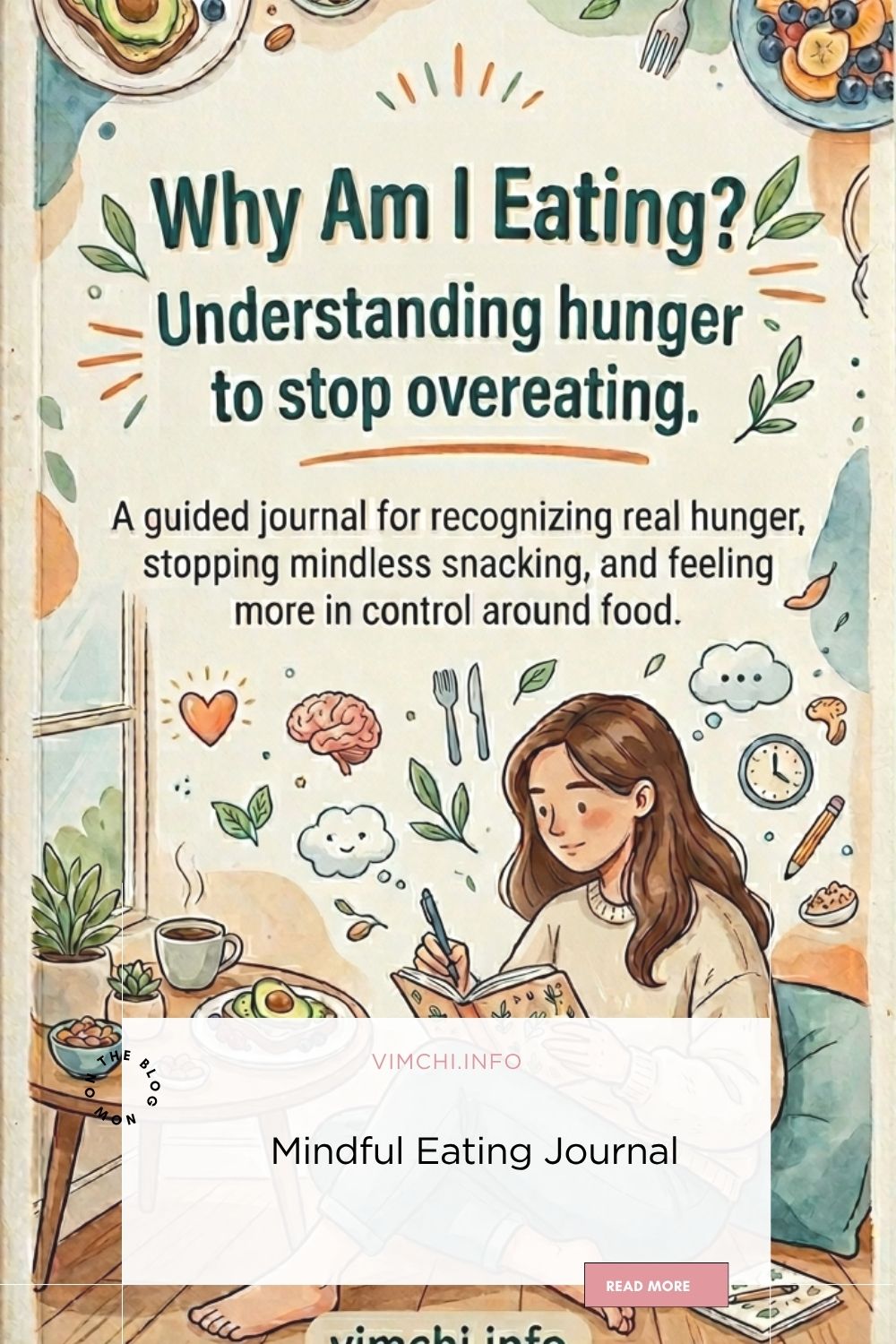
Download The OMAD and Mindful Eating Journal: Stop the Binge-Restrict Cycle (PDF)
How to Journal Your Triggers
How to use our mindful eating journal when your emotional eating strikes? The most effective way is to keep it simple. When you feel the urge to eat but it’s not physical hunger, just open your journal and follow these prompts:
Name the Emotion
Start by identifying what you’re feeling. Make sure to be very specific. Is it anger or loneliness? How about procrastinating? Are you just exhausted?
Write these emotions as specifically as possible. For instance, if you’re anxious, you can write, “I’m feeling anxious today because of my presentation tomorrow.”
Assess Your Physical Body
Shift your attention to your sensations. Think about how your body feels right now. Are your shoulders tense? How about your jaw? Is it clenched? Does your stomach feel empty? Documenting this helps you differentiate between emotional hunger and physical hunger.
Identify the Trigger
Write something about what happened before you crave for something? Did you get a stressful email from your client? Or did you just finish a lousy round of golf? Did you see an ad about a certain food?
You must learn how to identify the exact moment the urge started. This can help you anticipate these traps in the future.
Brainstorm an Alternative
After knowing what you feel, you can start asking yourself: “What do I need right now? Is it food, or do I just need to rest?” If you’re lonely, you can connect with your friends. If you feel stressed, go out and play rounds of golf.
Write down one action that doesn’t involve food. It must be something that you can do immediately. The goal here is to address the underlying problem. In that way, you can say, “I need to eliminate this anxiety. I won’t be eating chips. Instead, I’ll go out and walk around the block. Or maybe I’ll just take a hot shower.”
Recognizing the Pattern
The pause is the main benefit of journaling. The long-term benefit is the data that you can gather about yourself. When you write down your emotions consistently, your journal can give you undeniable patterns. You might notice that you experience a sugar craving at, say, 11 AM on days when you don’t eat breakfast. This highlights a mix of deprivation and fatigue. Or you might realize that the reasons you binge last weekend is you forgot to order food for your mom’s birthday.
When you see the patterns on paper, the triggers lose their power. You can stop reacting to your emotional eating. Instead, you start to prepare for them proactively. If you know that you don’t eat breakfast, you’ll binge eat. Thus, you eat breakfast every morning.
Journaling transforms you from being a victim of your cravings into an investigator of your habits. But you have to be honest about what you’re writing. Don’t just write to make your journal exciting. Be honest about how you truly feel.
In addition to being honest, you must be patient and be willing to sit down and write your emotions. Be patient with yourself. But don’t try to be perfect. Your journal becomes your mirror. It can reflect your true needs so you can start nourishing yourself with something other than food.
Reconnect with Your Plate
You spend a great portion of your time consuming food. But do you actually experience the act of eating? Unfortunately, in this modern world, meals are squeezed between meetings. You eat while driving or writing emails. Furthermore, you eat mindlessly while you scroll through your phone or watch TV. When you’re not fully connected with your senses while eating, you miss the cues that can tell you to stop eating because you’re full.
To break free from automatic eating, you need a tool to help you stop your racing thoughts so you can be in the present moment while eating. This guided mindful eating script is designed to do just that.
Arriving at the Meal
Before you pick up your fork, take a moment to arrive at the table. Remove all distractions, like your mobile phone or a book. Turn off the TV. Clear away any paperwork or clutter from your eating space.
Sit down in your chair and allow your hands to rest gently on your lap. Then, slowly close your eyes for a moment. Take a deep breath. Exhale slowly through your mouth. Do this three times. With every exhale, imagine all the stress agents moving away from your shoulders or body.
Keep your eyes closed. Perform a brief scan. Ask yourself, “Am I physically hungry right now? If I am, on what scale?” You should feel the sensations in your stomach. Can you feel your stomach rumbling? You should acknowledge it with judgment. Remind yourself that you’re about to eat something that will nourish your body.
Engaging the Senses
After acknowledging your feelings, open your eyes and look at the food on your plate. For a moment, print that you’ve never seen that type of food before. Observe its texture and color. Can you see how vibrant the greens are? Look at how the light reflects off the moisture.
Then, engage your sense of smell. Inhale deeply. Do you smell the aroma of your food? Do you notice the spices, sweet notes, or herbs? Notice how your body responds to the smell. Doing so might make your mouth water or your stomach prepare to receive the food.
The First Bite

Slowly pick up your spoon or fork. Notice the weight of the utensil that’s in your hand. Select your first bite carefully. While moving the food toward your mouth, pay attention to the movement of your arm. Notice the anticipation that’s building in your body.
Place the food in your mouth. But don’t chew it yet. Allow the food to sit on your tongue for a few seconds. Notice its temperature. Is it cold or hot? What’s the texture feel like when it touches the roof of your mouth?
Now, start to chew it. But do it slowly. Notice how the texture changes with every bite you take. Observe the release of flavors. Does the taste change as you continue chewing, or does it stay the same? Move the food around the parts of your mouth. Make sure to engage all your taste buds.
Keep chewing until your food is liquid. Don’t swallow until you completely chew your food. Follow the sensation of your food as it’s moving down your throat and traveling into your stomach. Pause completely. Rest your utensil on the table. Take a deep breath before you take a second bite.
Mid-Meal
Continue eating your meal by chewing thoroughly, swallowing, and pausing. When you’re halfway through your plate, intentionally stop. Put your fork down and drink water to cleanse your palate.
Close your eyes for a brief moment and check back with your body. Ask yourself, “Am I full? How’s my hunger level now?” Notice the shift from feeling empty to feeling satisfied. Remind yourself that you don’t have to finish everything that your body is saying that you have enough. You can stop eating when you feel nourished and not stuffed. Listen to the cues that your brain and body are telling you.
Now, if you decide to continue eating, make sure to do it consciously and mindfully.
Reflection After Your Meal
When you decide you’re finished, push your plate forward. Sit back in your chair. Take a deep breath and notice how your body feels now.
If there are thoughts of food guilt that start to creep into your mind, acknowledge them. But let them pass. You have completed mindful self-care.
How to Break the Cycle of Binge Eating

You can’t stop emotional eating overnight. It’s a process. In that case, it takes a lot of time to rewrite your brain’s default responses. You can start by following this step-by-step approach so you can have control over your emotions.
Hit the Pause Button
When there’s an urge to eat, pause for a while. This can delay the action. Don’t just tell yourself, “No.” Instead, tell yourself “not right now.” Wait for at least five minutes. During this time, the craving will peak and subside.
Track Your Eating Habits
Awareness is truly a great weapon. You need to document what you eat, when you eat it, and how you feel while eating. This will help you understand your subconscious partners. This is where our mindful eating journal becomes useful. It’s designed to help you connect the dots between your triggers and your food choices. This is also where you can review the fact that you ate that bag of chips after watching Bones or any stressful TV shows.
Build a Replacement
Taking away food as your way to cope with a stressful situation requires replacement. It can be something that doesn’t involve food. Thus, you must create a list of activities that can take your mind away from your emotions.
If you’re stressed, for instance, you can take a hot shower. Or just lie on your yoga mat and do a 10-minute yoga. You can also try squeezing a stress ball.
On the other hand, if you’re lonely, don’t watch Netflix. Instead, call a friend. Play with your pet, if you have one. Or have a few rounds of golf.
If you’re bored, you can read a book or organize your drawer. But never go to your pantry and start organizing your food.
Manage the Aftermath
You’ll relapse after practicing mindfully. This is common, and this is expected because you’re designed to eat on autopilot. Thanks to our modern lifestyle. Experiencing food guilt after eating triggers more negative emotions. This often leads to another binge.
Instead of shaming yourself, you can start by practicing self-compassion. You must remember that one emotional eating episode won’t ruin your phrases. It’s just data that you can use to help you prepare for the next trigger.
Stress Eating vs Emotional Eating: Is It a Mental Disorder?
Stress eating and emotional eating are often used interchangeably. However, there’s a distinction between the two.
For one, stress eating is a type of emotional eating. Emotional eating, on the other hand, will make you turn to food as a response to any feeling, like sadness, boredom, loneliness, or joy. Stress eating is a direct response to pressure, anxiety, and overwhelm. It’s even by your hormone called cortisol. Furthermore, it triggers intense cravings for high-fat, sugary, or salty comfort foods. The reason for this is that these foods give you body quick energy for a certain threat.
In other words, all stress eating is considered emotional eating. But not all emotional eating is stress eating.
Is Emotional Eating a Mental Disorder?
Occasional emotional or stress eating is completely normal. It’s not a mental disorder. You can seek comfort in your food during a difficult week. When my father died, I was stress eating for months. But I got over it. It was my way of coping with my frustrating, depressive situation.
However, if it occurs all the time, you may need to consult a professional. Emotional eating isn’t a diagnosable illness. But it can be a clinical issue if it starts to impact your mental or physical well-being. If it already affects your overall lifestyle or work, then it’s a disorder. You need to talk to a qualified professional.
If your emotional eating episodes become frequent, you feel out of control, involve consuming a huge amount of food in a short period, and result in intense feelings, then it may be a sign of binge eating disorder (BED). Unlike general emotional eating, BED is a recognized mental health condition.
Not Perfect Willpower
You can’t stop emotional eating with perfect willpower or adhere to a strict diet. It’s about listening to your body and understanding your emotional needs. Find healthy ways to nurture yourself that don’t involve food.
How to Stop Emotional Eating: Frequently Asked Questions (FAQs)
1. What does emotional eating mean?
Emotional eating means using food to cope with feelings, instead of satisfying physical hunger. It involves reaching for specific comfort foods to soothe negative emotions, like sadness or boredom. It’s a habit of trying to temporarily numb emotional discomfort, rather than addressing the underlying issue.
2. What are the types of emotional eating?
The four main types of emotional eating are emotional, situational, social, and psychological triggers. Emotional triggers involve eating to soothe feelings, like stress or sadness. Situational triggers are habits tied to environments, like snacking while watching TV. Social triggers are driven by social anxiety and physiological triggers that stem from bodily states like sleep deprivation.
3. What is the root cause of emotional eating?
The root cause of emotional eating is an inability to process and cope with uncomfortable feelings. Instead of sitting with emotions, the brain seeks the immediate neurochemical reward and distraction that food provides. Chronic restrictive dieting fuels the fire by creating a state of deprivation that breaks your willpower.
4. Can emotional eating be healthy?
Occasional emotional eating is a completely normal human behavior. It only becomes unhealthy when food turns into your primary mechanism for managing life’s challenges. As long as it’s done mindfully and along with other regulation tools. Finding comfort in food doesn’t have to be a source of guilt.