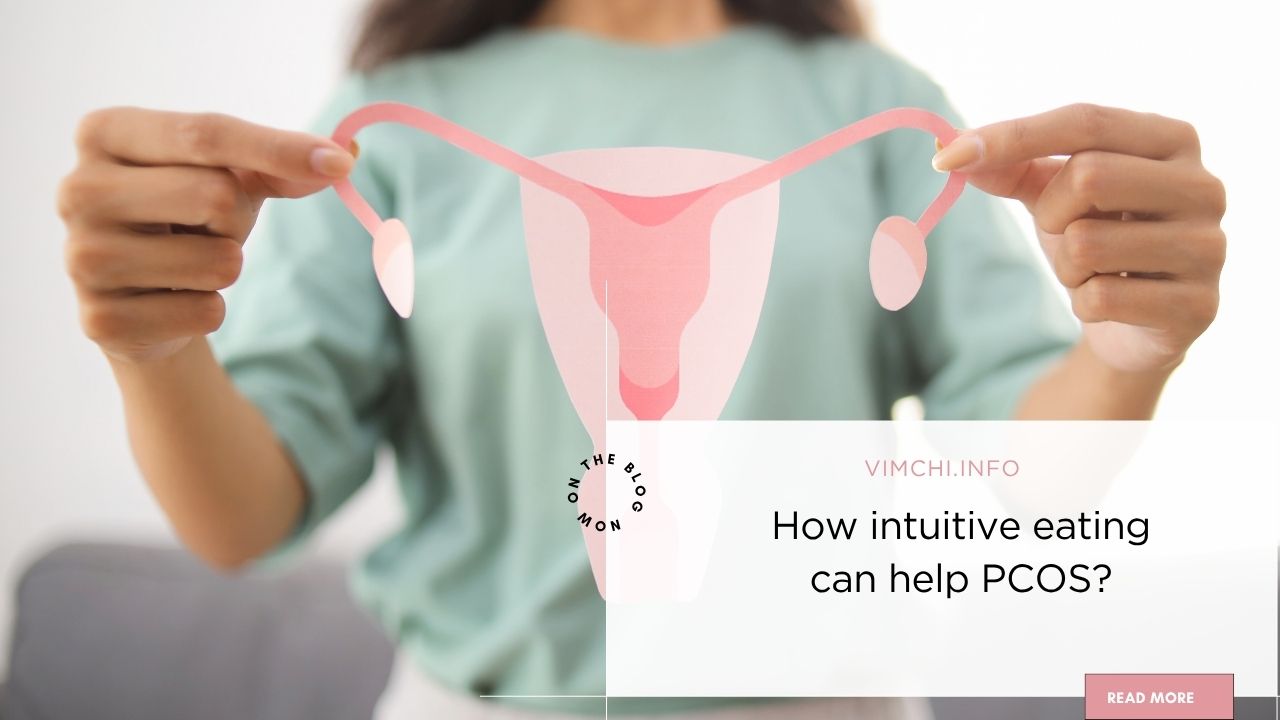
Polycystic Ovary Syndrome (PCOS) manifests in various symptoms. The standard medical advice is to lose weight. Unfortunately, it’s not that easy. You can cut carbs, eliminate dairy, strip away gluten, and avoid sugar at all costs. But the outcome isn’t good. The reason for this is that they only lead to fatigue, intense cravings, brain fog, etc. Enter intuitive eating for PCOS. It’s not a diet. Rather, it’s a framework that can let you manage your insulin levels, lower chronic inflammation, and balance your hormones without counting calories.
Here is everything you need to know about following intuitive eating to manage your PCOS.
Intuitive Eating for PCOS: Diet and Insulin Resistance

To understand how intuitive eating can help PCOS, you must first look at how it affects the body. Insulin resistance is the common culprit. It means that your cells don’t respond efficiently to insulin. As a result, it causes your pancreas to pump more insulin.
Unfortunately, high levels of insulin can do the following:
They signal your ovaries to produce more testosterone. But this only leads to more symptoms, like acne, hair loss, and irregular cycles.
They trigger biological cravings to give you quick energy.
Diet culture tells you to use your willpower so you can cut out carbs. But your body screams for glucose because your cells are starving. Restriction will only cause you to overeat.
However, if you shift towards intuitive eating, you can stop fighting your cravings and start working with your biology. You learn to acknowledge your hunger, stabilize your blood sugar, and lower your chronic stress that can only increase your cortisol level.
Losing Weight Using Intuitive Eating for PCOS
The most common question about intuitive eating is whether it can help you lose weight if you eat intuitively.
It’s valid to ask, especially if you gain weight or you have difficulty losing weight. However, gaining weight and difficulty losing weight are symptoms of PCOS. To practice intuitive eating successfully, you must understand its role in your weight.
Intuitive eating isn’t about losing weight. Rather, its main goal is to heal your relationship with food while improving your metabolic health markers, like fasting insulin, blood pressure, and inflammation. Even though nothing happens to the scale, mindful eating can help you stop overeating. Soon, you’ll see the positive outcome.
When you adopt intuitive eating with PCOS, you can expect these things to happen to your weight.
- Your Weight May Decrease: If you have a love-hate relationship with food, you will find yourself bingeing. However, if you practice mindful eating, you can find a peaceful baseline that may result in weight loss.
- Your weight may stay the same: Your body may be at its natural weight where it functions best hormonally. This is especially true if you’re weighing the normal range.
- Your weight may increase: This happens if you have been chronically malnourished for many years of extreme dieting.
Intuitive eating is shifting you away from stress and restriction. Your metabolic health markers improve, even if your weight stays the same. You’re actually trading your obsession with a number on the scale for true cellular health.
Taming Your Bingeing
PCOS creates intense carb cravings. That’s why you’re at high risk for developing binge eating. This can take a toll on your weight loss goal. You need to restrict your cravings while losing control around food. If this is you, you need to focus on binge eating recovery.
Intuitive eating treats binge eating as a consequence of restriction, and not as a flaw in your character. When you give yourself permission to eat, you no longer have to deal with good vs bad food.
If you have PCOS and follow intermittent fasting, you’ll find it difficult to manage. It may also backfire. Learning how to stop overeating after fasting is a vital step in restoring your hunger and fullness cues. When you starve your body for a long time, you trigger a response that makes mindful eating impossible when the fasting window closes.
Thus, the actual secret to stabilizing your PCOS blood sugar levels is to nourish your body throughout the day with the right amount of food.
Mindful Eating Tailored for PCOS
There are many principles of intuitive eating. However, only a few are required when it’s related to PCOS.
Reject the Diet
You must first understand the fact that restrictive dieting won’t cure you overnight. Embrace this reality. Sustainable health can’t coexist with food rules that can only cause you mental anxiety.
Honor Your Hunger
You may have ignored your hunger cues because you were trying to follow a strict caloric budget. With PCOS, ignoring your hunger can only cause your blood sugar to crash. This leads to a massive cortisol spike and intense cravings.
Hence, when you follow mindful eating for PCOS, you’ll learn to eat when you’re hungry.
Gentle Nutrition
This is the most vital step for PCOS. Gentle nutrition means that you make food choices that only honor your health and your taste buds while making you feel good. You don’t subtract food from your plate. Rather, you focus on adding things to your plate that stabilize your blood sugar.
Thus, if you want a piece of toast, you must not restrict your body. Rather, add a source of protein and fat to it. It can be eggs or avocado. The protein and fat slow down your digestion. It also prevents a sharp insulin increase while fully satisfying your craving.
Mindfulness in Healing Your Relationship with Food
Moving away from following strict dieting guidelines can feel overwhelming. If you don’t have a list of rules, how do you make decisions, right? But the answer is truly in your internal awareness. Before you jump into intuitive eating, it’s best to learn how to start mindful eating as a baseline.
Mindful eating teaches you to engage your senses and evaluate how foods make your body feel. To start implementing it in your daily life, check out our step-by-step mindful eating guide here.
If you’re a beginner, you can practice these mindful eating exercises, like dedicating the first five minutes of your meal to silence while focusing on aromas, flavors, and textures. This exercise can significantly lower your stress responses related to eating. This reduction in cortisol is a great win for your hormonal balance.
To explore the changes that come with intuitive practice, you may read about the long-term benefits of mindful eating. This will help you feel motivated to stay the course when old dieting thoughts return in your mind.
Daily Habits and Routine
To make this practice sustainable, you need to move from theory into your day-to-day life. For one, you must build consistent mindful eating habits. It can be putting your fork down between bites or checking in with your fullness levels in the middle of your meal. You may also remove screens from your dinner table. These can all recreate the pathways between your brain and your stomach’s fullness hormones.
But this awareness must not disappear when you leave your house. Instead, practice mindful eating even when you’re at work or school. This is to ensure that you don’t undercut all day because of stress. Then, only to return home ravenous and ready to binge eat. Thus, to prevent binge eating, pack satisfying snacks with complex carbs. Then, opt to eat clean proteins. In that way, your energy levels are flat and stable throughout the day.
Emotional Side of PCOS
PCOS can affect you not just physically but also emotionally. Dealing with unwanted facial hair, fertility struggles, and hair thinning can surely create an emotional burden. It’s natural that food can become a tool for comfort or emotional soothing.
Thus, if you find yourself turning to food just to cope with the stress of your symptoms, remember to be kind to yourself. Emotional eating is a valid coping mechanism. But if you feel that it has become your sole tool to manage your feelings, make sure to read our emotional eating guide. This guide can help give you the toolkit that you need to soothe your emotions without involving your pantry.
To track your patterns safely, you should have a mindful eating journal. With this journal, you can document how you feel before, during, and after meals to help you untangle PCOS hunger cues from emotional needs.
Be Patient
Healing your hormones through intuitive eating can take a lot of time. If you’ve been dieting for many years, you can’t expect your body to regulate its hunger cues in 24 hours or in two weeks.
But you must trust the process of intuitive eating for PCOS. Each time you honor your hunger, pair a carb with a protein instead of restricting it. Slow down when eating. You must enjoy your food mindfully.
Intuitive Eating for PCOS: Frequently Asked Questions (FAQs)
What is the 30 30 30 rule for PCOS?
The 30-30-30 rule is a popular metabolic health routine that involves eating 30 grams of protein in 30 minutes of waking up, followed by 30 minutes of low-intensity exercise, such as a brisk walk.
Which diet is best for PCOS patients?
The best diet for PCOS is one that’s sustainable, anti-inflammatory and non-restrictive. Traditional diet promotes a low-carb or keto diet. But these are difficult to maintain long-term. Instead, medical experts recommend a Mediterranean or anti-inflammatory style of eating that follows intuitive eating principles.
What do Koreans do for PCOS?
South Korean talks a more deeply holistic approach to hormonal health. It blends traditional Korean medicine with modern lifestyle practices, like an anti-inflammatory, nutrient-dense diet and emphasis on low-impact daily movement.
How to lose 20 kg with PCOS?
Losing 20kg of weight when you have PCOS needs a shift away from calorie-restriction methods. You must prioritize insulin sensitivity over calorie deficits. Then, lower your cortisol and switch to strength training and low-impact training.

Jane is a licensed medical technologist who bridges the gap between clinical precision and digital innovation. While her formal background is rooted in the meticulous world of laboratory science, her passion lies in the logic of software development. When she isn’t analyzing data or writing clean, efficient code, you can find her on the golf course, applying that same focus and discipline to her swing.
I’m so glad you’re here. Your perspective adds so much value to this community—feel free to leave a note below!