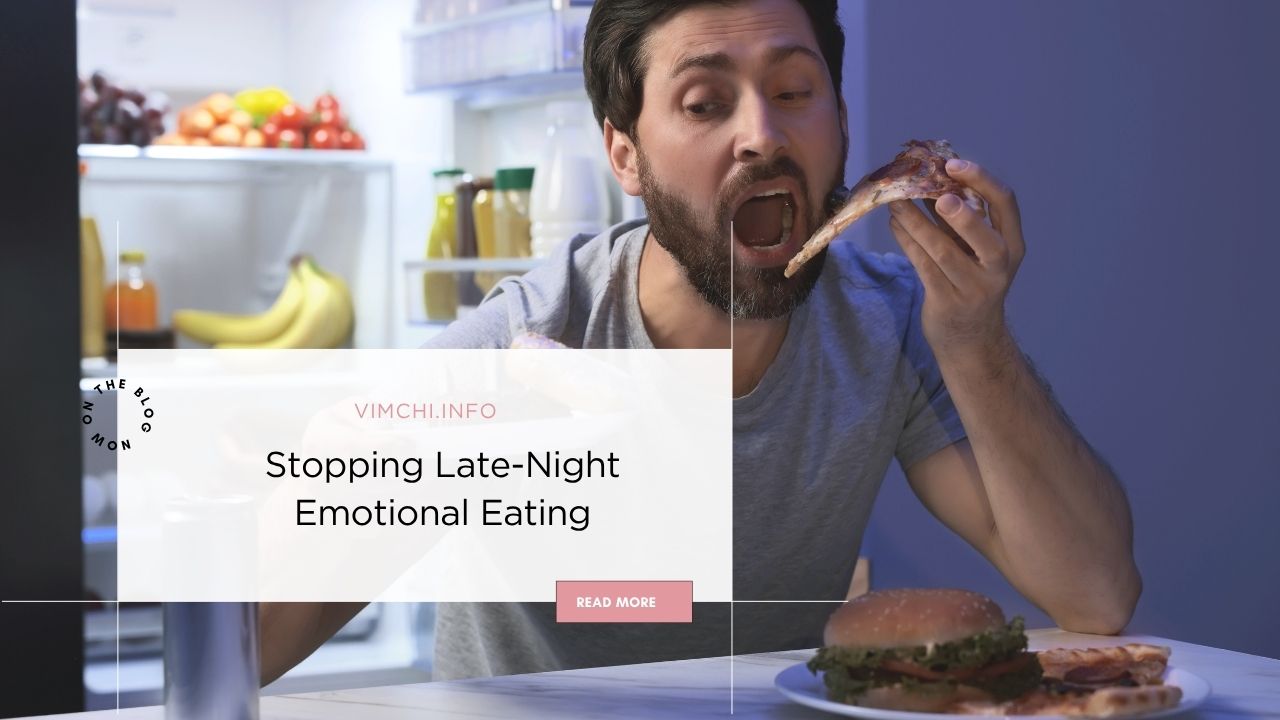
It’s 10 PM, and the house is quiet. Despite having a huge meal at 6 PM, you still find yourself standing in front of your open refrigerator. You’re not physically starving, but you have the urge to reach for something sweet or salty. Feels familiar, right? You’re not alone (This is me sometimes). Late-night snacking is common among those who need emotional eating support.
If you’re one of them, then the kitchen is your sanctuary where you attempt to soothe the leftover tension, anxiety, and exhaustion of the day. Unfortunately, if you wish to break free from this cycle, you need more than just willpower. Listed below are some sustainable strategies that can help you stop emotional eating.
But first, let’s talk about why you turn to food when the sun goes down.
Emotional Eating Support: Reasons You’re Stress Eating at Night
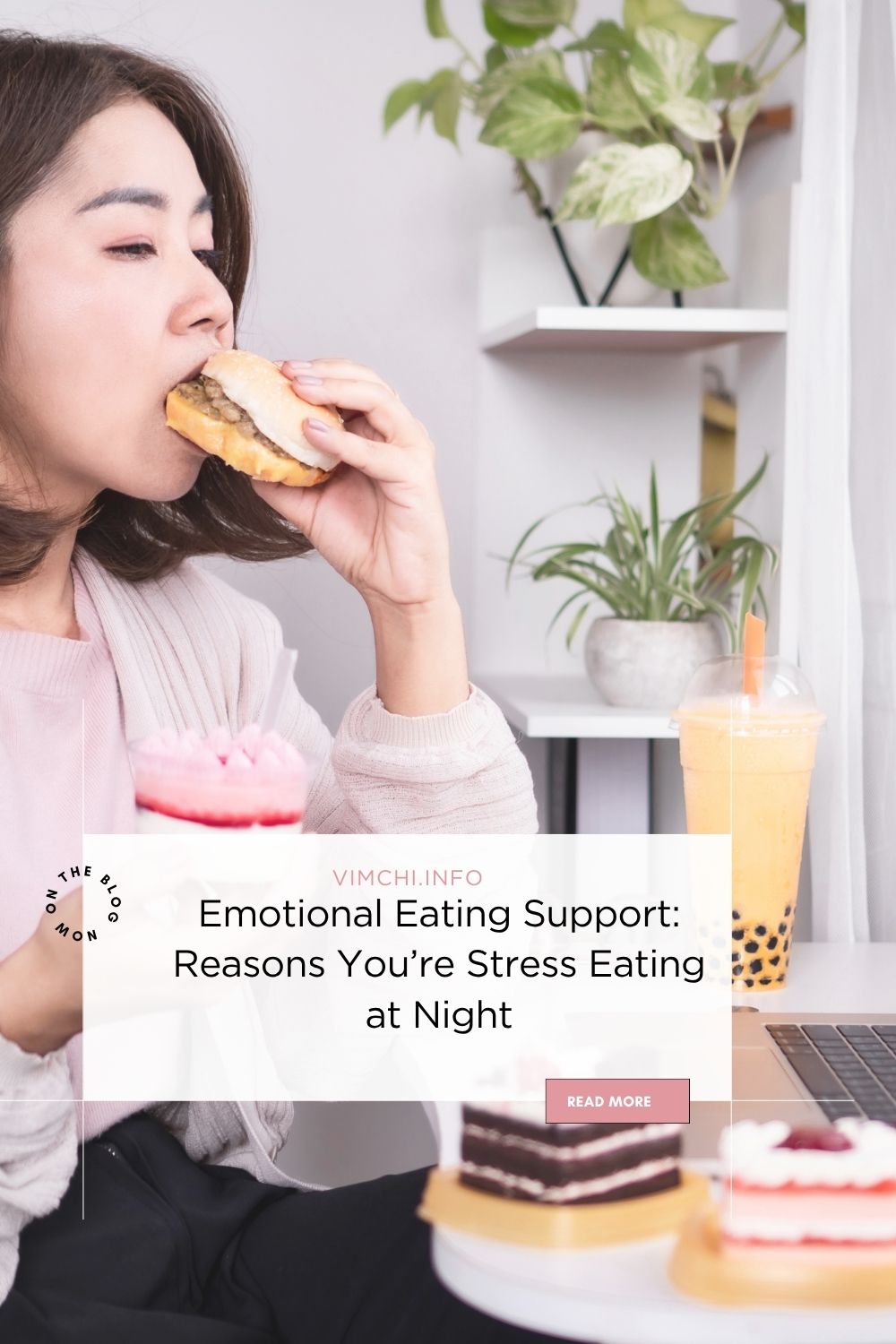
1. The Cortisol and Dopamine
Your body produces cortisol throughout a demanding day. When your stress becomes chronic, your brain continues to make you seek high-calorie comfort foods to get rid of the tension. At night, when your responsibilities slow down, your brain looks for a quick hit of pleasure to compensate for your stressful day. Food provides an immediate surge of dopamine, especially sugary foods. To dive deeper into how this chemical reaction functions, read our article about why I eat when stressed.
2. The Wind-Down Illusion
The kitchen is usually the only place where no one is asking for anything. After hours of taking care of your family or answering emails, eating becomes a form of passive entertainment. This is often a matter of eating when bored or using food as a boundary between work time and rest time.
The Conflict: Differentiating the Signals
As part of your emotional eating support, you need to differentiate between physical hunger and emotional hunger. Learning to read your internal cues can help you delay or stop the nighttime kitchen raid.
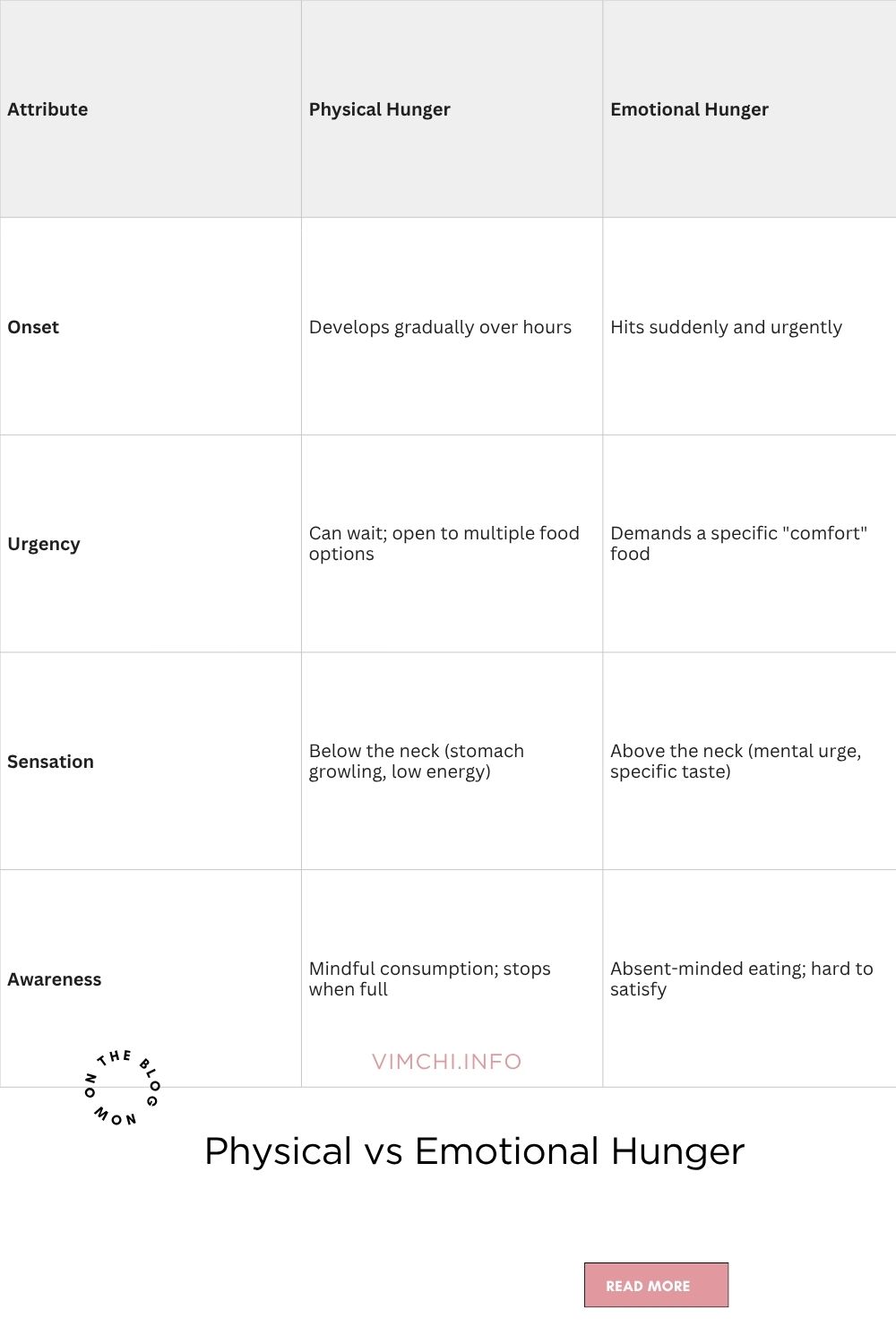
Learning these signals is a step in your healing journey. For a comprehensive comparison of these bodily cues, read our analysis of emotional vs. physical hunger.
How Restrictions Feed the Nighttime Cycle
When you realize that you’re overeating at night, your immediate instinct is to clamp down on your food intake during the day. You skip breakfast, track your calories strictly, or cut out entire food groups. Unfortunately, this is a recipe for a midnight relapse. When you restrict your food intake during the day, it creates physical deprivation that matches your emotional exhaustion by nightfall. Your drive to survive joins forces with your emotional need for support. And this is the reason restrictive dieting leads to emotional eating.
Restrictive eating triggers a full-blown emotional eating episode where you eat past the point of physical comfort, followed by heavy food guilt after eating. Breaking this cycle means trading restriction for consistent nourishment throughout the day.
Stopping Late-Night Emotional Eating
Getting rid of your evening eating habits needs practical adjustments to your environment and daily routine. Here are actionable strategies to help you break the cycle.
1. The 10-Minute Intermission

When experiencing the urge to eat at night, don’t tell yourself no. The reason for this is that it only triggers an immediate deprivation mindset. Instead, just tell yourself later. Give yourself a 10-minute intermission. While waiting for that time to hit, drink a glass of water. Step away from the kitchen. Stretch a bit. The intense emotional wave peaks and subsides in that brief window.
2. Eat Adequately Throughout the Day
The most common cause of nighttime overeating is a dietary restriction. If you under-eat or skip meals during the day, your body completes the evening in a panic. For that reason, ensure that you’re getting enough protein, complex carbs, and fats before 6 PM to keep your hunger stable.
3. Identify Your Triggers
Emotional eating isn’t random. Rather, it’s situational. Do you eat when you watch a certain TV show, like Top Chef? Or do you head to the pantry the moment you finish your final work task? When you know the exact emotional eating triggers, you can easily intervene before the habit loop automates itself.
4. Change Your Nighttime Environment
If your kitchen counter has visible snacks, your brain has to expend constant mental energy to resist them. That’s why I don’t often stock junk foods. I also no longer buy a box of cake. Instead, I just buy slices of cake. In that way, I don’t have to think about it before turning in. When you keep your evening environment clean and clear, you’re making the foods that support your long-term well-being easy to access. The highly processed ones must be out of direct line of sight.
5. Create a Non-Food Reward Ritual
If eating is your way to celebrate making it through a tough day, giving it up will feel like a punishment. Thus, you should replace the late-night snack with a new luxury, such as a hot shower, a chapter of a book, or a soothing cup of herbal tea.
6. Keep a Digital Log Before You Bite
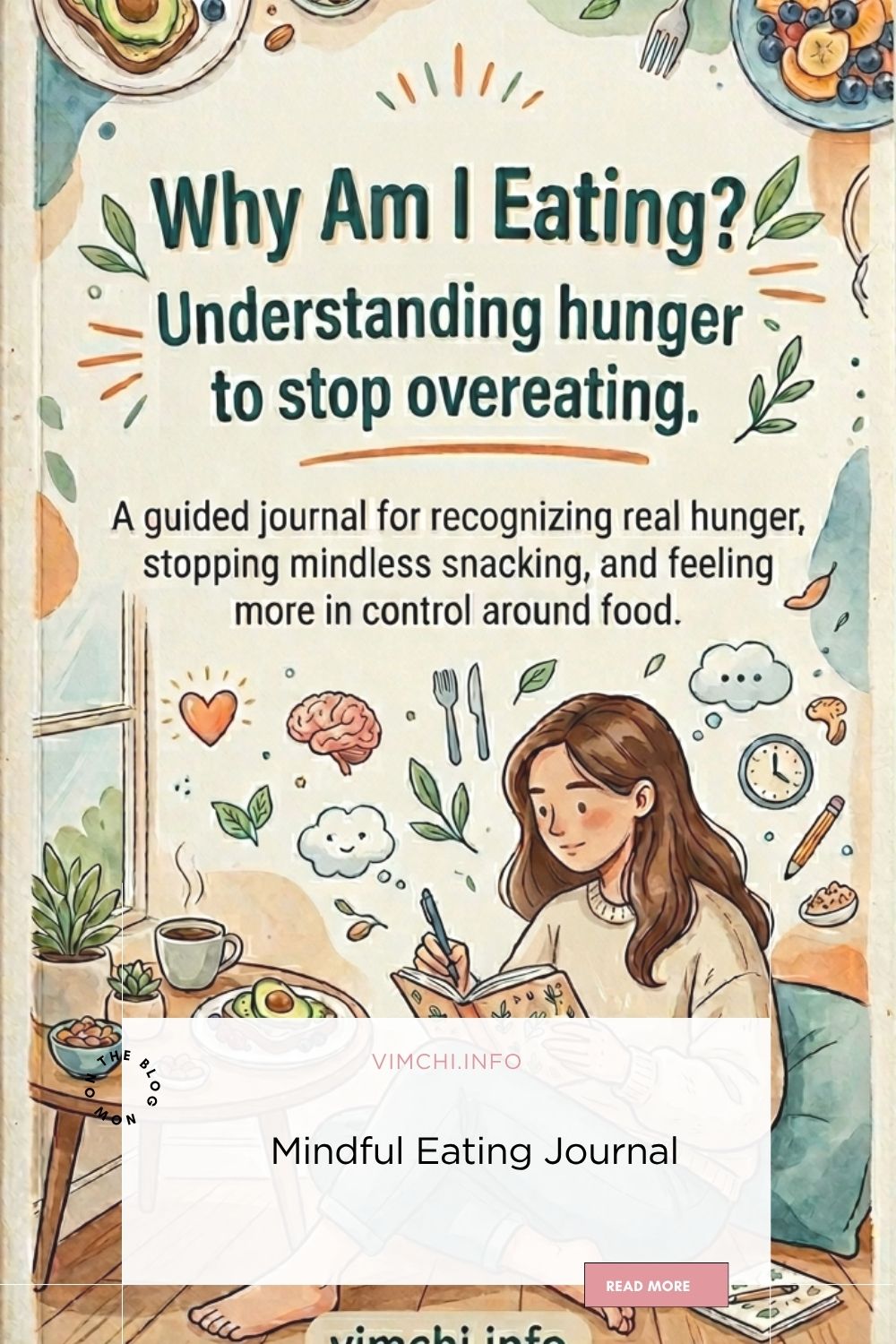
Download Mindful Eating Journal
Before you reach for food, open your mindful eating journal. If you don’t have one, you can download our emotional eating support journal here. Use it to write down exactly what you’re feeling. Are you bored? Lonely? Anxious about tomorrow? Force your brain to articulate the emotion that pulls you out of autopilot and puts you back in the driver’s seat.
7. Establish a Clear Cue
Create a ritual that signals to your brain that the eating portion of the day is over. It could be brushing your teeth right after dinner. You can also turn off the main kitchen lights or light a certain candle in your living room.
8. Practice the Above the Neck Check
When you find yourself reaching for a snack, you must stop and ask yourself: Where am I feeling this hunger? If it’s a physical sensation in your stomach, it’s true hunger. If it’s a mental urge or a certain taste craving lingering in your mouth, then it’s emotional.
9. Upgrade Your Sleep Hygiene
Fatigue is a major driver of late-night cravings. When you don’t get enough sleep, your body seeks out quick energy sources like sugar and carbs to keep you awake. Setting a strict bedtime routine can decrease midnight kitchen trips.
10. Cleanse the Night of Mindless Screens
Mindless scrolling or watching intense TV shows can increase cortisol levels. It also leaves your hands looking for something to do. Instead of watching those stimulating shows, choose calming activities an hour before your bedtime. Doing so will drop your nervous system back into a resting state.
11. Grant Yourself Unconditional Permission to Eat
If you try all of these steps and still decide you want to eat, then do so without judgment. Take a portion of the food. Then, sit at a table without your phone. Savor every bite. Eliminate the secrecy and shame, which strips the emotional charge right out of the food.
Real-World Resilience
Finding your footing with emotional eating is difficult when your life throws major stressors your way. It can feel like an uphill battle when financial pressure, professional anxiety, and daily exhaustion converge all at once.
To see what this battle looks like in real life, look no further than our 7 PM eBook. Bianca Darce is a freelance professional facing the familiar modern crisis. Less than $100 left in her bank account, a stack of overdue bills piling up, and the pressure of securing her next contract. As the clock ticked, the crushing weight of financial uncertainty would trigger an urge to soothe herself with food. Bianca chose to fight. You can read more about it by downloading the Short Story of Extreme Fasting and Control eBook here.
Foundation of Emotional Eating Support
True progress doesn’t come from rigid rules. Instead, it comes from building support and developing self-awareness.
Evening Reflection Process
Pause and Ground for 5 Minutes
Step completely out of your kitchen. Close your eyes and focus on the sensation of your breath to interrupt the automatic habit loop. Take three deep breaths.
Check the Clock and Cues for 2 minutes.
Assess physical time vs internal state. Ask yourself, “When was the last time I ate?” If it was less than three hours ago, your energy reserves are still fine. It means the “hunger” is just emotional.
Name the Emotion (2 minutes)
Give the feeling a label. Identify what you are actually craving. Are you lonely? Exhausted or anxious about tomorrow’s workload? When you name the feeling, it reduces its power over your actions.
Address the True Need (remaining evening)
Provide non-food comfort. If you’re tired, go to bed. If you’re anxious, just write down your feelings using a journal or listen to a calming track.
Your Toolkit for Lasting Change
If you’re ready to stop fighting your body and start understanding it, you need resources that can promote mindfulness over restriction.
The Master Plan
For a deep dive into rewiring your relationship with food from the ground up, read our guide on how to stop emotional eating.
Daily Self-Awareness
You can move away from mindless eating and start documenting your internal cues without judgment. You can pick up our specialized mindful eating journal. It’s designed to help you monitor your moods, triggers, and hunger levels in real-time so you can identify patterns and make informed choices.
Be patient with yourself. Late-night stress eating is a habit that took years to build. It will definitely take time to gently unwind. Use the emotional support tips to help you stop stress eating at night so you can get started in finally finding peace when the kitchen lights go down. Or read our mindful eating guide here.
Emotional Support: How to Stop Stress Eating at Night Frequently Asked Questions (FAQs)
1. What are the reasons you’re snacking at night?
Late-night snacking is driven by a mix of daytime calorie restriction, elevated evening cortisol, and exhaustion. Your brain craves high-sugar or simple-carb comfort foods at night to get a quick hit of dopamine to unwind from the day.
2. What is intuitive eating?
Intuitive eating is an evidence-based wellness framework that honors both physical hunger and biological satiety signals instead of following dietary restrictions. It encourages you to reject the diet mentality, make peace with food, and choose meals based on what actually nourishes your body and makes you feel good.
3. How to stop snacking at night with intuitive eating?
To stop late-night snacking using this approach, you must drop daytime food restrictions and give yourself unconditional permission to eat satisfying meals during the day. It prevents the deprivation that triggers an intense drive to overeat when the sun goes down.
4. How to stop overeating at night?
The best way to stop evening overeating is to build a check-in routine, like a 10-minute intermission or a digital log, before reaching for a snack. It’s vital to create a distinct non-food transition ritual to signal to your brain that the day is winding down. Keep processed snacks out of your direct line of sight to protect your energy from constant decision fatigue.
5. How can you distinguish between physical hunger and emotional hunger at night?
Physical hunger builds up gradually over several hours and can be satisfied by a variety of nourishing food options. Emotional hunger hits suddenly and urgently, typically demanding a very specific high-calorie comfort food to soothe a mental feeling above the neck. If your urge can be satisfied by eating an apple, then it’s physical hunger. If not, it’s emotional hunger.

Jane is a licensed medical technologist who bridges the gap between clinical precision and digital innovation. While her formal background is rooted in the meticulous world of laboratory science, her passion lies in the logic of software development. When she isn’t analyzing data or writing clean, efficient code, you can find her on the golf course, applying that same focus and discipline to her swing.
I’m so glad you’re here. Your perspective adds so much value to this community—feel free to leave a note below!