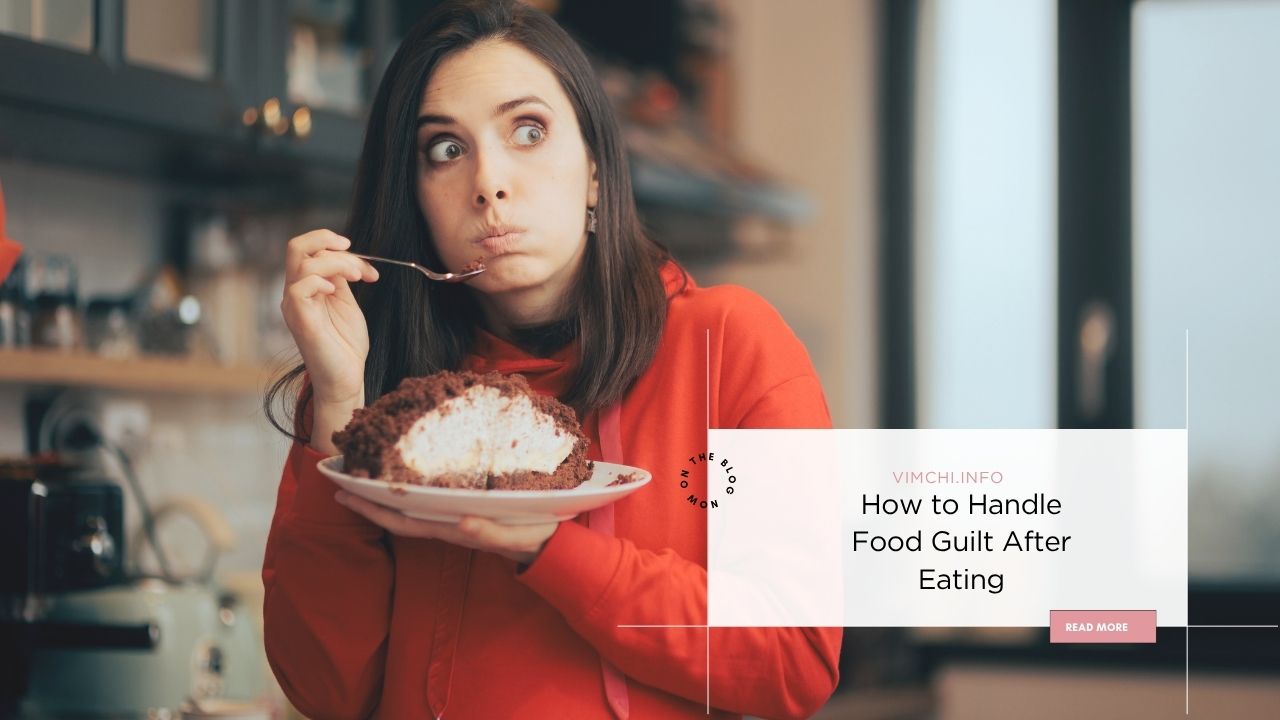
Food guilt after eating is a common feeling. I feel it sometimes. For instance, just this morning, I ate cassava cake. Not just a slice but slices. I was outraged at myself after eating mindlessly. If you feel the same, don’t be too hard on yourself. You must realize now that food guilt is common, and it does steal your present peace. To help you build a sustainable relationship with food, you should find practical tools to be more compassionate with yourself when it comes to food guilt.

How to Handle Food Guilt After Eating
1. Take a Deep Breath and Disrupt the Panic Response
The moment you feel guilty, your body doesn’t only experience a mental thought. Rather, it also undergoes a physical shift. Your nervous system enters fight-or-flight mode. You’ll feel that your heart rises, your breathing is shallow, and cortisol floods your system. But this sudden spike in stress hormones impairs your digestion. It leads to bloating and discomfort that your brain interprets as more proof that you did something wrong.
To help you hand food guilt, you can stop what you’re doing. Get out of your kitchen. Then, take three deep breaths. Inhale through your nose for four seconds, hold for four seconds, and exhale slowly through your mouth for six seconds.
It may be a simple act, but it stimulates your vagus nerve. It signals to your brain that you’re safe. Acknowledge the guilt without acting on it. Admit that it’s just a wave of guilt you’re feeling. Remember that a single meal doesn’t define your health or your worth.
2. Decode the Source
Food guilt rarely happens when you honor true hunger. It almost always sneaks when you use food to fill a certain void. To stop it from recurring, your main defense is to learn to pause and ask yourself what made you overeat.
Developing the skill to differentiate between emotional hunger vs. physical hunger is an absolute game-changer for your long-term food freedom. To delve deeper into the ways to stop emotional eating, you may read our practical guide on how to stop emotional eating.
Physical hunger builds up gradually over several hours. It starts in your stomach with rumbling or low energy. You can satisfy it by nourishing your body with any food. When full, it leaves you feeling content.
Emotional hunger is quite different. It demands immediate satisfaction. It focuses on comfort foods that are high in sugar or simple fats. As a result, it leaves you with a hangover of regret. The next time you eat, use this section so you can identify your starting point.
3. Map Out the Cycle
To beat food guilt after eating, you must understand the invisible trap that many of you fall into. Guilt doesn’t exist in a vacuum. It’s the fuel for the recurring cycle to ensure that you keep stuck in that situation.
When you feel out of control after eating, your immediate reaction is to promise more willpower and apply strict dietary rules tomorrow. Unfortunately, this restriction is what triggers intense cravings. Eventually, your survival instincts override your rules. But this leads back to overeating that immediately invites the guilt right back in. Breaking this cycle requires removing the catalyst entirely, which is the guilt itself.
4. Ban the Good vs Bad Food Binary
Why do you feel guilty in the first place? That’s because your brain loves patterns. You’ve spent years being conditioned to categorize food into binary. That is, you categorize broccoli as good while a donut is bad. When you eat something labeled as bad, you decide that you’re now a bad person.
But food has zero moral value. A cookie is not bad. It’s not malicious. It’s just a food with a mixture of macronutrients, micronutrients, water, and energy. Some foods provide more nutrients. But all foods can have a place in your balanced life. Thus, you can shift your internal dialogue from moral judgments. When you label foods, make sure to label them as nourishing and playful.
5. Investigate Your Coping Mechanisms
This is about knowing why you eat when you’re stressed. If you realize that your post-meal guilt is coming after a stressful day at work or an argument with a loved one, take a moment to look at your life. When you’re overwhelmed, your cortisol and adrenaline levels elevate. This shift signals your brain to seek out the fast release of these sources to prepare for a perceived crisis.
If you constantly ask yourself, “Why do I eat when I’m stressed?” know that it’s not a defect in your willpower. It’s just a survival mechanism. Food triggers an instant release of dopamine in your brain’s reward center. It acts as a temporary chemical shield against your emotional pain. You must recognize this to stop pushing yourself for stress-eating and start focusing on managing the actual stressor.
Resource: The Mindful Eating Journal
It’s not easy to break a lifetime of guilt-ridden eating patterns. That’s because it needs more than just good intentions. Rather, it requires a physical space that can help rebuild your self-awareness. Our mindful eating journal provides a layout to help you check in with your emotions before, during, and after eating. When you spend just two minutes logging your true hunger levels and mood state, you can bridge the gap between emotional impulses and intentional choices.
6. Check for Mindless Habit
Sometimes, the driver of mindless eating isn’t a high-stress crisis. It’s a lack of mental stimulation. Eating when bored is one of the most widespread patterns in our current lifestyle. When your brain is under-stimulated, you experience a drop in dopamine. Your subconscious realized that walking to the kitchen and grabbing a bag of chips is the easiest way to get a hit of entertainment.
So, the next time you find yourself walking towards your fridge, run the broccoli test. To do this, simply ask yourself whether or not you’re physically hungry that you can eat a bowl of steamed broccoli. If your answer is yes, then your body needs actual fuel. But if it’s a no, then it’s just a distraction from your current task or the absence of a task. Close the fridge door, step away, and choose to stretch for five minutes. You can step outside for fresh air or just a chapter of a book.
7. Practice Radical Self-Compassion
If your friend came to you crying because she ate an extra slice of pizza, would you tell her that she completely ruined everything? Pretty sure, you won’t do it. Instead, you’d offer her a warm hug and tell her it’s just one meal. You can remind her that she deserves to enjoy herself.
In that case, you shouldn’t allow your inner critics to scream things at you that you would never dream of saying to someone you love. Treat yourself with self-compassion. Forgive yourself for the mistake you made minutes ago. Remind yourself that a single meal won’t ruin your overall fitness. You should alter your long-term health metrics.
8. Hydrate Comfortably
When you eat meals that are unusually high in simple sugars, sodium, or heavily processed ingredients, your body naturally retains water. It can cause immediate physical symptoms, such as a tight stomach, mild lethargy, or systemic bloating. This purely physical sensation of fullness is misinterpreted by an anxious brain as guilt. It makes you feel heavy in your mind.
To support your body, just drink a glass of water or a warm mug of herbal tea, like peppermint, ginger, or chamomile. These herbs relax the smooth muscles of your digestive tract and reduce gas. Never chug water in an attempt to flush out the calories or fill your stomach to avoid your next meal. Just hydrate yourself to assist your body’s natural digestive engine.
9. Shift Your Focus from Cravings
It’s easy to lose a healthy perspective on what you’re experiencing. When food guilt makes your world feel tiny and stressful, it can be difficult to step out of your own experience and look at the concept of eating and fasting through a lens of raw human survival.
Recommended Reading: 7 PM Window
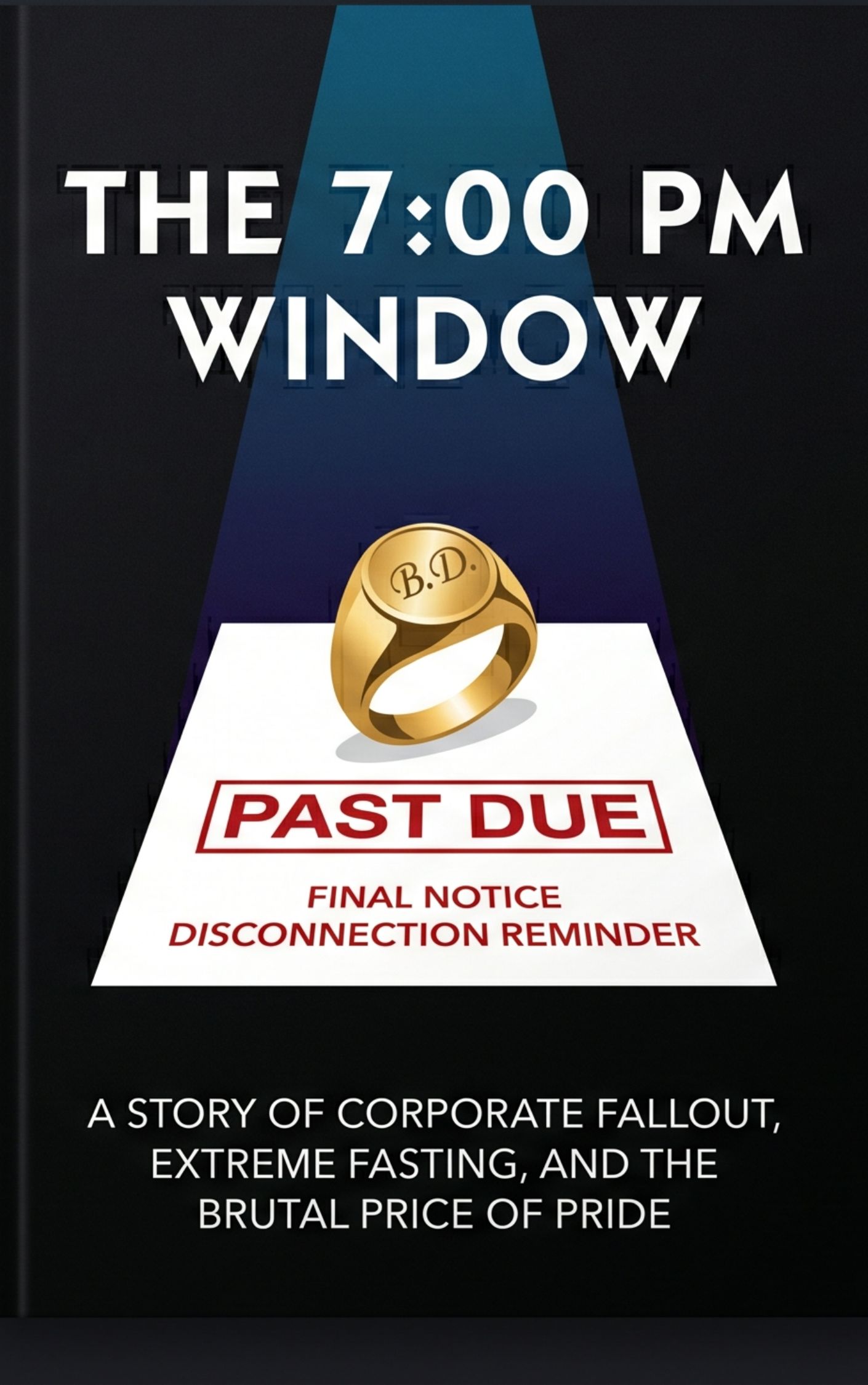
If you’re looking for a great perspective shift on food, resilience, and true survival, dive into our latest eBook that details the story of Bianca Darcer. Bianca is a freelancer navigating the unpredictable waters of the gig economy. She has to deal with struggling financially while fighting to ensure she can survive 23 hours of fasting.
10. Engage in Gentle Movement
When you consume a heavy meal, your bloodstream experiences a significant rise in glucose. Instead of sitting down on your couch, letting your thoughts spiral into despair, use that energy to assist your metabolism and lift your mood.
Step outside for a casual walk. As your leg muscles contract, they draw glucose directly out of your bloodstream to use as energy. The golden rule here is context. Don’t force yourself into a high-intensity cardio session. Movement must be a gentle gift to help your stomach digest and not a penalty for overeating.
11. Build a Forward-Looking Blueprint: How to Stop Emotional Eating
Freeing yourself from food guilt doesn’t mean that you must know how to manage the emotional fallout after you have overeaten. The ultimate goal here is to move from reactive damage control to proactive emotional resilience. It requires building a long-term framework for your daily choices.
Take the time to learn the system of how to stop emotional eating before an intense craving. Invest in comprehensive emotional eating education so you’ll know how to sit with uncomfortable emotions, like stress, loneliness, sadness, or boredom, without reaching for a food shield. Over time, you’ll find that you can choose to enjoy your favorite treat intentionally.
Healing
You can heal from food guilt after eating. But it takes time to achieve it. Be kind to yourself as you learn to navigate your emotions.
Food Guilt After Eating: Frequently Asked Questions (FAQs)
1. What is food guilt?
Food guilt is a negative emotional response that occurs after consuming certain foods or eating a certain volume of food. It happens when you feel that you have violated a personal rule regarding eating.
2. Where does food guilt come from?
Food guilt is a learned behavior that stems from pervasive diet culture, media messaging, and societal conditioning. From a young age, you’re taught to categorize food into a strict moral issue. That is, vegetables are good, and processed snacks are bad.
3. How to stop feeling guilty after you eat?
To stop your guilt after a meal, you need to disrupt the biological and mental panic response by breathing and grounding yourself. Don’t compensate by drastically cutting calories. Change your environment. And practice self-compassion.
4. How to overcome food guilt?
It’s a long-term journey that requires your relationship with nutrition. You need to shift your mindset from restriction to food freedom.
5. How does mindful eating help eliminate food guilt?
Mindful eating is one of the most effective ways to stop food guilt because it teaches you to stay present in the moment instead of reacting to a strict set of rules. When you eat mindfully, you engage all your senses to savor your food, slow down your pacing, and listen closely to your body’s cues.

Jane is a licensed medical technologist who bridges the gap between clinical precision and digital innovation. While her formal background is rooted in the meticulous world of laboratory science, her passion lies in the logic of software development. When she isn’t analyzing data or writing clean, efficient code, you can find her on the golf course, applying that same focus and discipline to her swing.
I’m so glad you’re here. Your perspective adds so much value to this community—feel free to leave a note below!